Coins of Athas
The base unit of currency in Athas is the Ceramic Piece (CP), a small disc made of baked clay, glazed with colors and designs specific to each city-state. They are scored such that they can be split into 8 "pie slices", called "bits", for smaller transactions.
For the purposes of this document, we will assume an average market day in Tyr for translation of coin value to purchasing power. The conversion rates to other coins are widely adopted across Athas.
| Coin | Name in Tyr | Value in CP | 2026 USD equivalent | What it can buy in Tyr |
|---|---|---|---|---|
| Bit | None official | 1/8 CP | $12.50 | A meal at a street vendor, or a 20-lb bag of flour (official basis of the currency) |
| Ceramic Piece | Gerah | 1 CP | $100 | A night's stay at a modest inn |
| Silver Piece | Shekel | 10 CP | $1,000 | A good suit of armor or weapon, a lavish weekend in a nice inn, or a skilled artisan's services for two days |
| Gold Piece | Mina | 100 CP | $10,000 | A high-quality suit of armor or weapon, or a month's rent in a nice district |
| Platinum Piece | Talent | 1,000 CP | $100,000 | A small house in a common district, or a year's salary for a skilled artisan |
| Unit | Value (CP) | USD Equiv. | Material | Weight (approx) | Dimensions (Dia x Thick) |
|---|---|---|---|---|---|
| Gerah | 1 | $100 | Baked Ceramic | 15g | 40mm x 4mm |
| Shekel | 10 | $1,000 | Sterling Silver | 39g (1.25 oz) | 38mm x 3.5mm |
| Mina | 100 | $10,000 | Pure Gold | 104g (3.35 oz) | 32mm x 6.5mm |
| Talent | 1,000 | $100,000 | Refined Metal | 1.04 kg | 100mm x 50mm x 10mm (Bar) |
Dev notes:
- Silver and gold are valuable, but these values are ridiculous. However, Athas is famously short on metals of all kinds, so if we assume a 10x reduction in silver supply, this becomes feasible. Gold was less effected by Defiler magic, so it's closer to a realistic value.
Currencies of Tyr
In practice, the most common currency in Tyr is no coin, but in fact bags of grain, which are used to pay laborers and soldiers, and are often traded among the lower classes as a form of currency. The value of a bag of grain is officially 1 CP, serving as the basis for the currency system, although in practice, large purchases of grain are usually sold in commodity markets at prices that fluctuate based on supply and demand.
Merchants and artisans do use coins, but they are most often used for larger transactions, for business-to-business transactions, or as a way to make up the gap when trading commodities.
Coins
| Coin | Material | Weight | Diameter | Thickness |
|---|---|---|---|---|
| Gerah | Ceramic | 23 g (0.81 oz) | 55 mm (2.17 inches) | 3.6 mm (0.14 inches) |
| Shekel | Silver | |||
| Mina | Gold |
Gerah (CP)
Often referred to using bread or grain-based nicknames, like "give me some bread", or "thirty grains".
Physicality: Imagine a heavy, over-sized poker chip. It's glazed terracotta with a deep stamp of a wheat stalk or the seal of a Sorcerer-King.
Why this size? It needs to be large enough not to break easily in a pocket. If it were dime-sized, it would snap. At 40mm, it feels substantial—like a "heavy" day of work.
Shekel (SP)
1.25 troy oz of silver
Physicality: This is roughly the size of a Silver Eagle but significantly thicker.
Dimensions: 38mm diameter (standard large coin) but 3.5mm thick. It has a satisfying "clink" and a heavy hand-feel that commands respect in a bazaar.
Mina (GP)
3.35 troy ounces of gold.
Physicality: Gold is incredibly dense. This coin would be smaller in diameter than the Shekel but twice as thick. It would feel "wrongly heavy" for its size—a common trait of real gold.
Dimensions: 32mm diameter (slightly larger than a US Half Dollar) but a massive 6.5mm thickness. It’s a "slug" of a coin.
Talent (PP)
Sometimes minted as a 1kg bar of gold, but usually it is a measure of silver by weight.
The Ceramic Piece
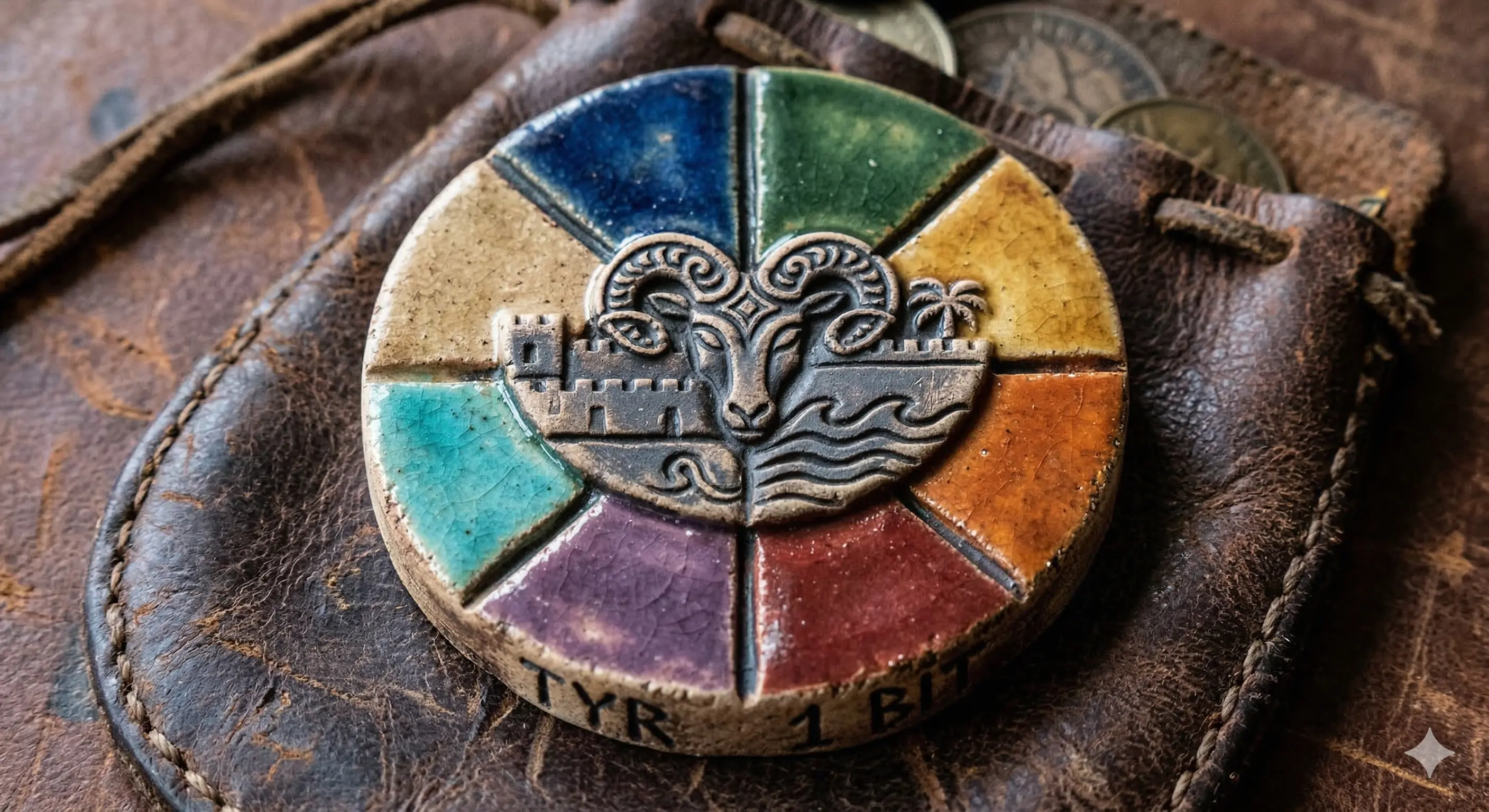
| Property | Value |
|---|---|
| Diameter | 55 mm (2.17 inches) |
| Thickness | 3.6 mm (0.14 inches) |
| Weight | 23 g (0.81 oz) |