The Hearthkin
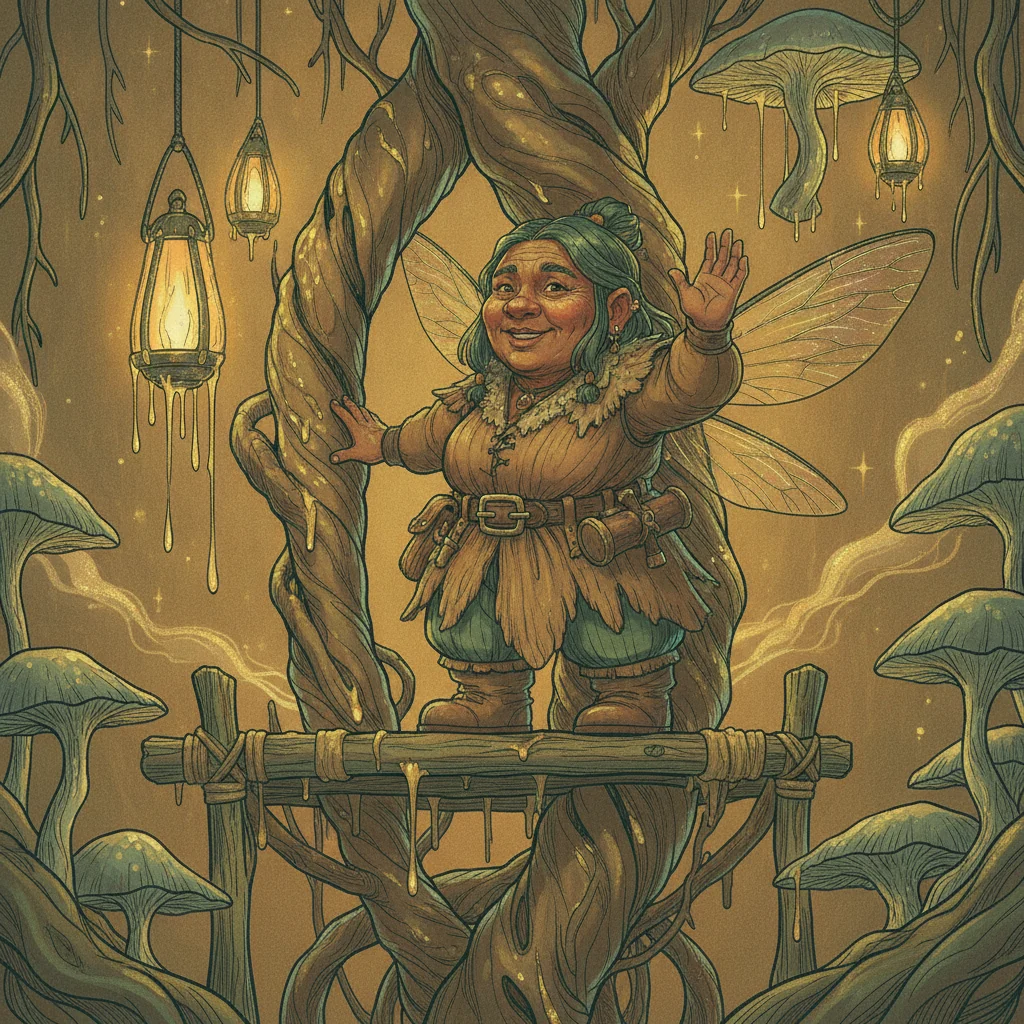
The Hearthkin are the clan-hollows: the warm stone majority of the Deephearth, the fungus tiers and grub-pens and freight-worms, and the people every other race means when they say Gnome. When the main entry describes hollows hundreds strong, the knock-code, and the moot, it is describing them — and they would correct one word in it, which is tribe. They are clans. The Chancery's forms say tribes, and the Hearthkin have never corrected a form they could quietly ignore instead.
The court considers them the least ambitious people in the Kingdom, on the grounds that in all of history they have produced no king, no army, and no fashion. The Hearthkin have heard this assessment, generally while feeding the person delivering it, and regard ambition as a word for wanting something that is not dinner.
The Hollow
A hollow is one family, hundreds strong, in a chain of warm rooms carved around the taproots of the Greenmantle: sleeping galleries in glowcap light, fungus tiers, grub-pens, a long hearth where somebody is always cooking, and no doors anywhere that matter. Nothing is private and nobody minds — Gnomish solitude begins at about eleven people in the room, and a Hearthkin left genuinely alone will go and find a crowd the way other people find water.
The whole structure rests on one rule: kin is made, not born. Every Gnome arrived by metamorphosis and was claimed by whichever hollow found them, immediately, permanently, with inheritance and obligation attached — and so the Hearthkin are the one people in the Kingdom whose entire social theory is adoption. Blood is not an argument in a hollow. Neither, the moot has repeatedly ruled, is species: more than one hearth carries a mole or a worm on its roll, listed as kin, because that is what they are.
The hollows talk to each other along the taproots — knock-code for news, NoneDeephearth resonance for the moot — which means a Hearthkin is never out of earshot of home, and knows it, and finds the surface's silence the loneliest sound there is.
Ways
Stone-singing. The elders' craft: a gallery is sung into stability rather than propped, and a hollow's safety rests on the handful of kin who can hear a settling a day before it becomes a collapse. Singers hold no office and outrank everyone; when a singer says leave, the argument happens outside.
The claiming. A new-metamorphosed Gnome is fed first and questioned never. The hollow that finds them takes them in as kin before nightfall, and the new name — given name, hearth, clan, in the manner of Dunnowar of the Ninth Hearth — is entered on the roll the same day. Asking a Hearthkin what they were before is not rude. It is meaningless, like asking a fire what it was before it was lit.
Moot-days. When the Motherstone carries a session, work stops and the hollow gathers at its sounding-wall to listen — to the arguments, the precedents, and above all to Matriarch Dunnowar letting a silence run. Moot-days are the Hearthkin's theatre, news service, and legal education, and children can recite famous rulings the way other races recite songs.
Relations
The Hearthkin regard the Deepfarers as kin who live near the interesting neighbors and marry accordingly, and the Sullen with gratitude, pride, and a worry nobody voices at table — the freight comes home, the money comes home, and some of the people come home changed. Both are still clan. Nothing about distance alters a roll.
With the Kingdom the relationship is a masterpiece of courtesy: royal instructions are received warmly, referred to the moot, and remain pending — some for decades. The Basekin speakers seated at the Motherstone are the quiet scandal of the realm, and the Hearthkin's position on the scandal is that the Queen is welcome to raise it at the moot, where her representative may take a number.
Playing One
- You are the party's ground. Shelter, walls, tunnels, a roof that will hold, and the certainty of dinner. Nothing you do is flashy and all of it is what everyone else is standing on.
- Kin is your resource and your leash. In any underground place there is a hollow that will feed you, hide you, and expect you to attend a cousin's claiming while you are there.
- Alone is the thing you are bad at. A solo watch is an ordeal; an empty room is worse. You did not know this about yourself until you left home, because at home it never once happened.
- A starting complication: bloodveil is coming up in your hollow's oldest gallery in a pattern the singers say is not subsidence, the elders have sealed the passage and said nothing to the moot, and you were sent up and out precisely so you would not be there — which they did not explain either.