The Orisha
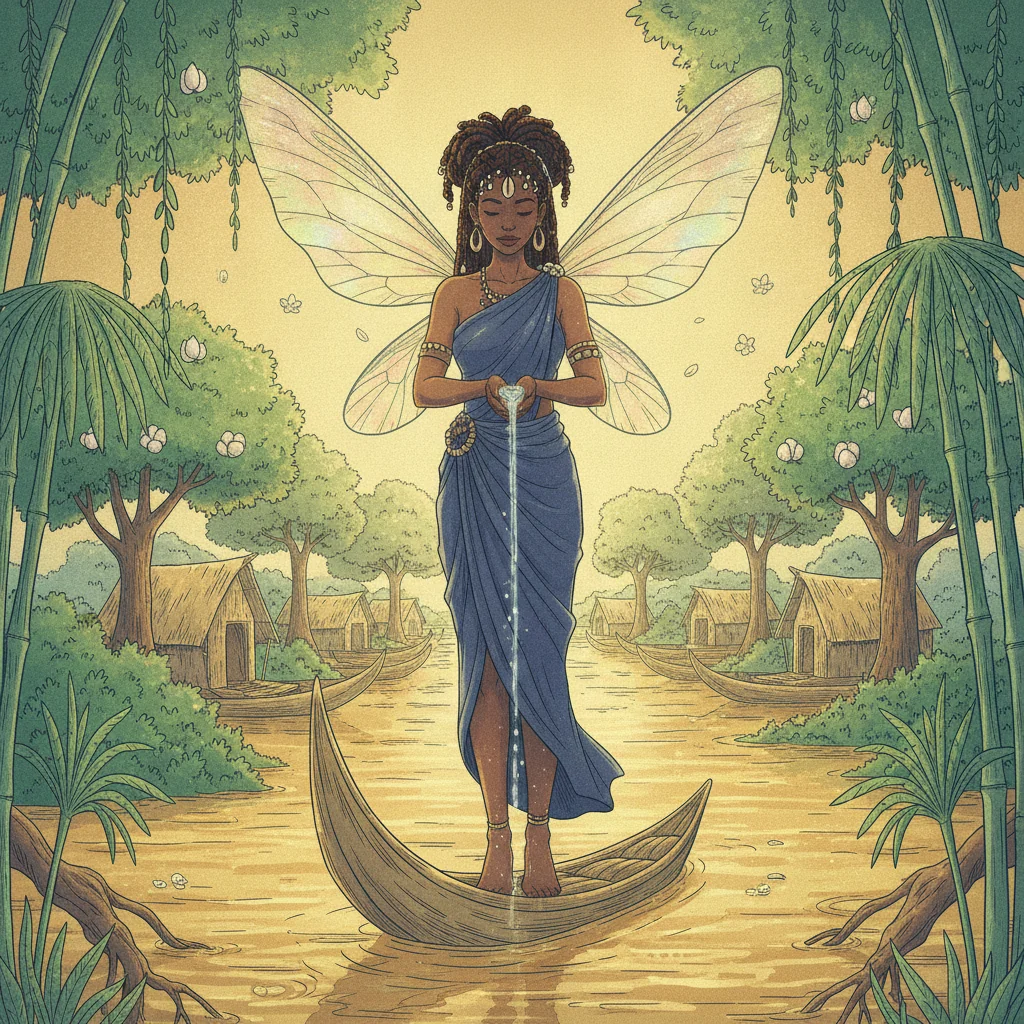
The Orisha live on the water rather than beside it. Their villages float on the Odo Oya — the river everyone else calls the Mami Wata — and an Orisha who sleeps on dry ground twice in a season will be asked, kindly, whether everything is all right.
The River
The Silt-Braided Basin is an immense labyrinth of emerald waterways, mudflats and seasonal floodplain, and the Orisha read all of it. They hunt, fish and gather in the surrounding wetland and return to the water to sleep, and their year is organised entirely around the flood: what it takes, what it leaves, and where the channels will be when it withdraws.
Their reed-bazaars and bamboo boardwalks are the trading heart of the Veldt, reached by dragonfly steed and wading water-strider, and everything the province sells to the outside world passes through one at some point.
The Living Water
They hold that the river is a living entity owed reverence rather than merely gratitude, and their whole religious life follows from that. Offerings go into the water; disputes are settled on it; the dead are given to it.
Their water magic is bound up in the belief and is largely protective and restorative — applied to the Odo Oya itself as often as to any person. An Orisha healer treats a fouled channel and a sick child with the same rites, and would find the distinction strange.
Ways
The most settled of the three Pooka tribes, in the sense that they stay in one river, and the least settled, in the sense that the river moves. They sing, as all Pooka do, but their music is antiphonal and tied to work — the call across the water, the answer from the next boat — rather than performed at anyone.
They trade upstream with the Iyara, whose flotillas on the Everflow live much as they do. The two peoples get on enormously well, and each privately considers the other a slightly odd reflection of itself.