The Yumbo
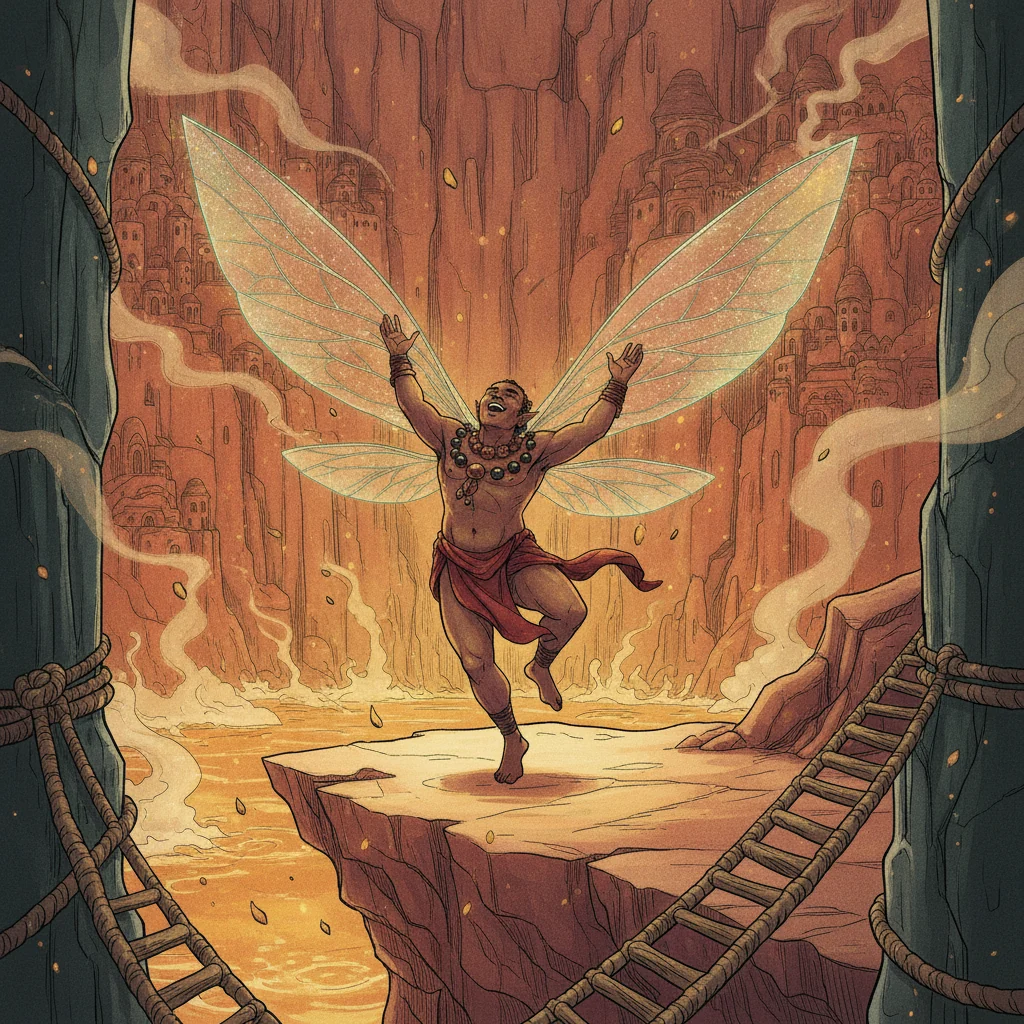
The Yumbo are the Pooka of the amphitheater city and of Belltown along the great flute bank below it — the civic performers, the instrument-makers, the cricket-breeders, and the electorate of the singing assembly. Half the tribe can hold a gallery, and the other half builds, strings, tunes, and breeds everything the first half needs to do it: the Kingdom's entire supply of anything that has to make a specific noise comes out of Belltown workshops, and a Belltown maker's mark on an instrument roughly doubles its price in the capital.
They are the Pooka other races meet on stage and imagine they know. What the stage does not show is that every Yumbo is also a voter, in the most public legislature in the world, and that the tribe's glamour is a civic institution: in the Round, performing well is not a career so much as a duty of citizenship, like paying tax, except that everyone can hear exactly how much you paid.
The Round
Deliberation in the Veldt happens in front of 25,000 people, in a chamber where a whisper on the floor reaches the top gallery undiminished — and a culture that governs itself this way for centuries comes out shaped by it, the way a tree comes out shaped by wind.
It cannot lie, or not well: a false note in the Throat is heard by everyone, literally, and Yumbo politics has accordingly given up on deception and specialized in selection — which truths get sung, in which order, at which point in the session. It cannot be private: every position ever taken is remembered, in tune, by thousands, so the Yumbo forgive readily and forget nothing, and a politician's youthful error is not buried but reprised, with variations, for decades. And it cannot be dull, because a proposal sung badly loses on its merits regardless of its merits — which is the system's one honest scandal, and the reason Belltown's voice-teachers are the most quietly powerful profession in the province.
Outsiders call it opera. The Yumbo agree, and point out that opera, done properly, is the only form of government where the audience can hear the exact moment a majority changes its mind.
Ways
Belltown works and the Round performs, and the two halves of the tribe intermarry, feud, and depend on each other completely: no voice without an instrument, no market for instruments without the voices.
The second hearing. No proposal may be voted on the day it is first sung. It comes back a session later, sung by a different voice — by custom, the best available opponent — and only what survives its enemy's best performance goes to harmony. The Yumbo consider this the whole of political wisdom and are baffled that no other province has adopted it.
Stall-standing. A household's cricket comes from a Stalls breeder, and the relationship is hereditary on both sides: the same Yumbo family buys from the same cricket-kin line for generations, attends its funerals, and stands its debts. It is the warmest institution in the tribe, and it does not come with a seat in the Round, and the warmth is beginning to notice the omission.
The Gale bill. Each Gale, the whole city moves into the vaults and the assembly's session continues underground, by tradition reduced to one item: the Gale bill, a single measure, argued for three deafening days, that by custom must be something the Round has been avoiding. The province's hardest decisions are all Gale bills. Nobody thinks this is a coincidence, and everyone dreads the years when the wind comes early.
Relations
The Yumbo regard the Aziza with the pride of a city watching its exports — every great Yumbo career ends with a circuit year, and every Aziza ballad is, eventually, evidence in a Yumbo debate. They regard the Orisha as the Vale's foundation and treat them accordingly, which is to say they remember them twice a year, at the Gales, when the Yumbo are guests in the Orisha's halls and briefly, instructively, quiet.
The court adores them: engagements, commissions, a standing summons to the capital's festivals. The Chancery studies them, because the Censor's Office has worked out what the court has not — that the Round is a legislature, that its sessions travel, and that the Yumbo electorate debates, in public, in permanent memory, questions the Kingdom does not permit to be asked in writing.
Playing One
- You can work a room the way a soldier works ground. Voice, timing, and the trained instinct for what a crowd will do next — a Yumbo reads an audience of two the same as an audience of thousands.
- You are Belltown-literate. Instruments, acoustics, tuned stone, cricket-song: anything in the world that makes a deliberate noise, you can appraise, repair, or sabotage.
- You cannot bear to be unheard. Privacy feels like failure and anonymity like death, which is a liability in exactly the work adventurers do most.
- A starting complication: you sang a position in the Round years ago, beautifully, and it is still remembered in tune — and the faction now quoting it back at you, verse-perfect, is using your own voice to argue for something you have since learned is monstrous.