The Waking World
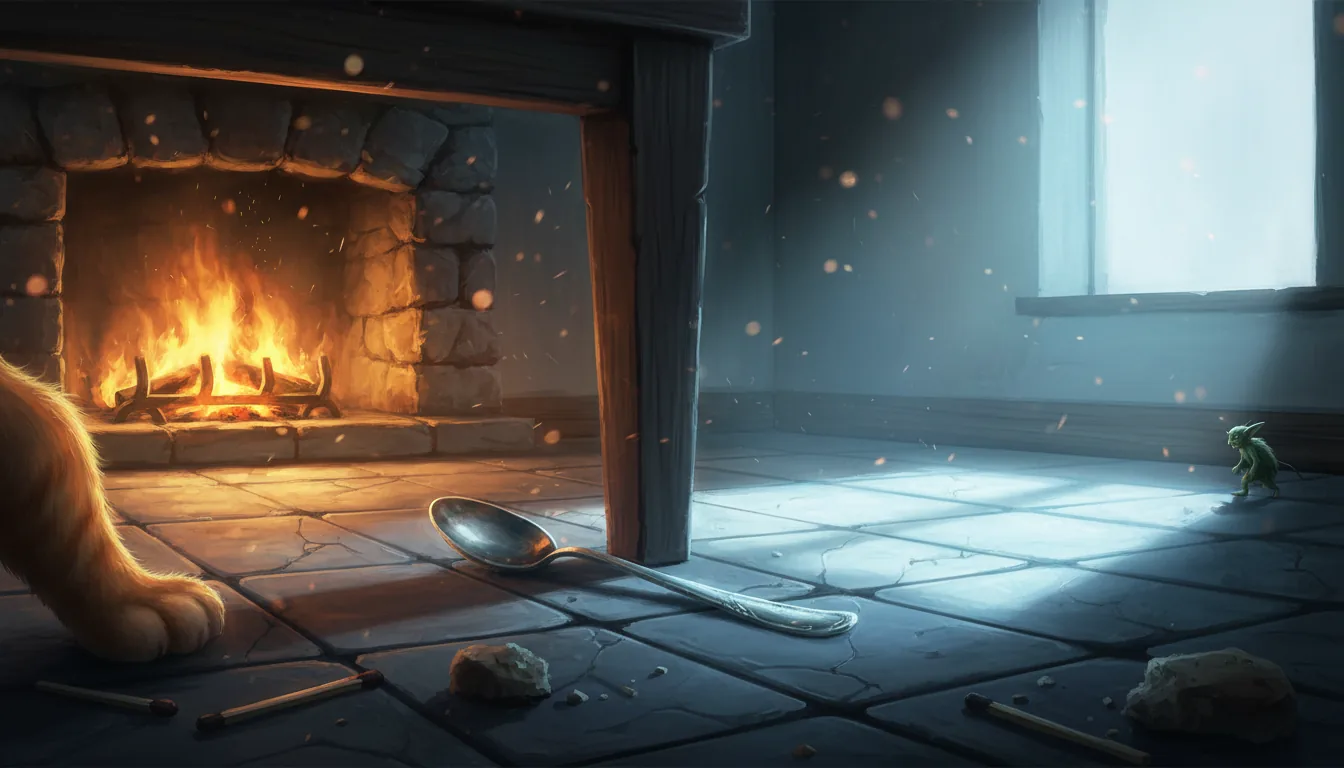
Not a region of this world at all, but reachable from it. Everything there is enormous, most of it is dangerous, and the natives are gods who do not know they are gods and are wrecking their own house.
The most terrifying creatures in either world live here: not the humans, who are slow and largely oblivious, but the colossi that hunt by scent and cannot be reasoned with, known to every fey child as cats.
The Land
A human house and its garden constitute a continent. The fey who work the Waking World do not think in kilometers; they think in rooms, and a room is a province, and a stair is a mountain range, and the distance from the kitchen to the shed is a week's expedition with a night halt.
- Scale. A human is a hundred and forty feet tall and moves faster than it looks capable of. A dropped book is a rockfall. A closing door is a geological event. Nothing here is sized for you and nothing here is watching where it puts its feet.
- The nose. Glamour defeats the eye and does nothing whatever to a dog or a cat. Scent is the fundamental hazard of the Waking World and every hobgoblin practice — the ash, the hearth-smoke, the routes along skirting boards — is built around defeating it.
- Weather indoors. Heating, plumbing, and cooking produce hazards with no natural equivalent: hot water arriving without warning, ovens, draughts strong enough to blow a Faerie off a shelf, and the machine that eats the floor and screams.
- Chemistry. Human cleaning agents are indiscriminate, aerosolized, and lethal at fey scale. A kitchen counter wiped down in the evening is uninhabitable until morning.
- The gods themselves. Humans are not malicious and are barely attentive, and this is the whole danger: they will move a wall, discard a household, or drown a garden without ever knowing that anyone lived there.
Flora and Fauna
| Feature | What it is | Why it matters |
|---|---|---|
| The garden | An entire biome, cultivated by a god at random | Food, cover, and the only outdoors most fey in service ever see |
| Compost heap | Warm, rich, teeming, and privately owned | The single most valuable real estate in any household |
| Cut flowers | Fey-world plants brought indoors to die on display | Every fey who sees this for the first time has the same reaction |
| Houseplants | Hostages | Hobgoblins tend them. The humans think they are lucky |
| Cat | Colossal; sees through glamour, hunts without hunger | The dread of the Waking World has a name and it purrs |
| Dog | Colossal; scent, enthusiasm, no discretion whatsoever | Cannot be evaded. Can, sometimes, be befriended, which is worse |
| Mice and spiders | Large to Diminutive; the household's other residents | Speaking people. Allies, informants, and the reason a house has politics |
| Houseflies and moths | Diminutive to Medium; came through with somebody | Half the insects in a human house have opinions about the fey |
Crossings
Crossings open in the Corpselight Fens, at certain gaps in the Hedges, and in the roots of the Greenmantle. They are not reliable, they are not mapped by anyone who will share the map, and the jacks who guide travelers to them charge accordingly.
The Kingdom's Position
Crossing is officially forbidden and unofficially depended upon, since Faerie fashion, architecture, and courtly manners are all imitations of human things brought back by travelers and passed off as original.
Hobgoblins go the other way and stay, taking service in human households, and are the only people in either world with a working understanding of both. Everything the Eternal City believes about humanity, it learned secondhand from a race it refuses to seat at its table.
Places in Service
Hobgoblins do not name countries. They name houses, and a house is a career.
The Ash House — Old Mother Ash's: a human household continuously served for longer than any hobgoblin can account for, through several generations of owners who have no idea. It is the closest thing the Waking World has to a capital, and its kitchen hearth is where every hobgoblin in the district eventually comes to ask something.
The Long Shelf — a library room in a large old house, held by a hobgoblin family for four generations, and the fey world's best collection of human knowledge: pages read at night, transcribed, and carried back through the fens by the Far Bank jacks.
The Glasshouse — a greenhouse. Warm, wet, lit, and full of fey-world plants that humans grow for no reason a Faerie can accept. It supports a permanent population of about eighty, most of them not hobgoblin, and it is the only fey settlement in the Waking World that could be called a town.
The Under-Sink — a service warren of the kind found in every human house: a few households, a stash, a scent-route, and an arrangement with the local mice. There are tens of thousands of these. This is what "30,000 in service" actually looks like.
Factions
The Service. Old Mother Ash and the hobgoblin households: an entirely informal order held together by seniority, obligation, and the fact that no one else knows how any of this works. Their doctrine is simple — the house is kept, the humans are not told, and the fey world is not brought here.
The Fetchers. Fey from the Kingdom who cross to take things: fashion, design, technique, and objects. They are illegal, they are financed by noble houses, and every single thing they bring back is passed off as original work. Hobgoblins despise them and guide them anyway, for money.
The Far Bank. Jack guides who work the human side. They know the crossings, they know the routes, and they are the only people who can get someone out in a hurry.
The Cat Watch. Not an organization: a practice. Every household in service maintains a warning system for the resident colossus, and the systems are shared, standardized, and taught. It is the most successful cooperative institution in either world and nobody has ever written it down.
The Tellers. A very small, very quiet group of hobgoblins who believe the humans should be told. Not all of them, and not soon — but one, carefully chosen, as an experiment. Old Mother Ash has forbidden it. Two of them have not stopped.
Sites of Interest
The Ash House Hearth. A working fireplace in a house that has had one for centuries. Hobgoblin practice is built around it: the ash defeats scent, the smoke covers movement, and the hearthstone is neutral ground where any fey in the district may sit and be heard. Old Mother Ash has been at that hearth longer than the house's current owners have been alive, and they have never seen her, and she has attended two of their funerals.
The Long Shelf. Human books, at fey scale, are architecture: a shelf is a street of them and a single page is a field. Four generations of one family have been reading them, and the transcriptions carried back through the fens constitute the fey world's entire real knowledge of humanity — which is to say that everything the Kingdom believes about the gods it emulates was copied out at night by a goblin the Kingdom will not seat at its table.
The Glasshouse. Eighty-odd fey living in a heated greenhouse among fey-world plants raised by humans for decoration. It is comfortable, it is dangerously exposed, and it is where every argument about what the fey are doing in this world eventually gets had, because the Glasshouse is the one place where a fey can stand among their own world's flowers and watch a god water them.
A Crossing, From This Side. The gates look like nothing from the Waking World: a gap under a hedge, a particular root, a place in a reed bed. They do not stay put. A hobgoblin who has used the same crossing for thirty years will still check it before trusting it, and the standard advice for anyone else is that the way out is not where you left it and you should have hired a jack.
Hooks
- A Ring noble commissions the party as Fetchers: bring back an object, exactly, from a human house, for a masque. The object is a mirror. Nobody has explained why the commission specifies that it must have been used.
- A cat has learned the household's warning system. It is waiting where the warnings send people.
- One of the Tellers has done it — has spoken to a human, deliberately, and been understood — and Old Mother Ash wants the party to find out what was said before the Service finds out that it happened.
- The Long Shelf family's youngest has been transcribing something for two years that the Far Bank refuses to carry: a human account of the fey, accurate in ways that should not be possible, published four hundred years ago.
- A crossing in the roots of the Greenmantle has been used from the human side. Something came through that was not fey, and it is somewhere in the Kingdom, and the Dryads have not told the capital.
The Mirror
The setting's central discomfort lives here. As the humans have corrupted and exploited their environment, so the Faeries have mirrored those actions in their own realm, in emulation of beings they consider godlike — and it is strange indeed to idolize creatures who have made a ruin of their world and defiled the beauty that mirrors your own.