The Aurae
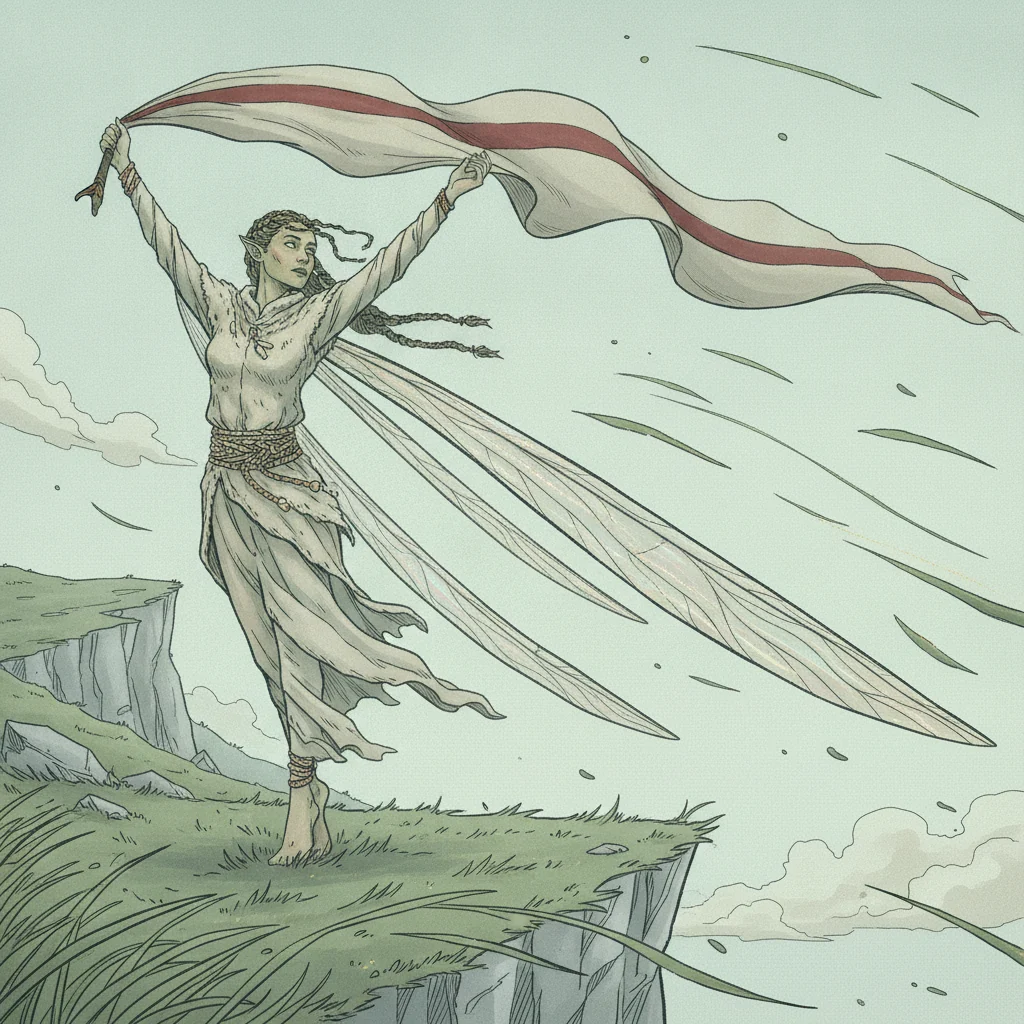
Where the meadows of the Heartland rise into the chalk downs of the northern rim, the wind comes off the Rimeward heights and never stops, and the Sylphs who live in it never wanted it to. The Aurae hold the Skirl: hanging vales, grass cropped short by the weather, and from every vale-head the banners — woven streamers a hundred feet long, dyed in colors the plains have no names for, flowing day and night.
They are what the Sylphs were before the capital happened to them. Not monks, whatever the Ring thinks — they marry, feast, gossip, and drive hard bargains in wool — but they are the keepers of the old wind-craft and the old songs, and the old songs are a problem, because they name the peaks of an ancient Sylph homeland, and no map of the Kingdom shows those peaks anywhere.
The Banners
Every household flies one, every vale flies a great one, and the weaving of them is the Skirl's whole literature. A banner records its household: arrivals woven in at the hem, dead and departed knotted into the fringe, weather-years striped through the field. A Aurae elder can read a stranger's banner the way a Chancery clerk reads a file, which is why the Skirl has never once asked the Chancery for a copy of anything.
The banners also work. A change in how a neighboring ridge flies its colors carries news, weather-warning, and mourning faster than any courier on the plains, and during the Kingdom's one attempt to tax the Skirl properly, the assessors reported that every vale they descended into had somehow already concluded its market day.
The oldest banners — the ones kept rolled at Vanehigh and flown only at the great moots — are woven in a pattern-language nobody now reads fluently. The parts that can still be read are not lineages. They are directions.
Ways
Life in the Skirl is wool, weather, and altitude. The Aurae herd cloud-sheep aphids on the high grass, weave, dye, and trade the plains for grain they cannot grow. Homes are low, turf-roofed, and open to the wind on principle: a Aurae door is a curtain, and a house the wind cannot pass through is considered dishonest — a place where words can be said that the sky does not hear.
Wind-craft. The Aurae are the finest pure aeromancers among the Sylphs. Where a Pixie winnows and a Flaunt rides the Thermal, a Aurae soars — working ridge-lift and standing waves to stay aloft far longer than any Faerie has a right to, though no higher; the old limit at altitude holds even here, and the Aurae speak of it the way other people speak of a locked door in their own house.
Arrival. A newly metamorphosed Sylph found in the Skirl is given a blank banner and a place at a loom, and weaves their own hem-mark before they are told anyone else's name. What they weave, unprompted and knowing nothing, is studied with enormous interest and never explained to them.
The Standing Moot. Twice a year at Vanehigh, the vales hang their great banners together and settle the season's disputes beneath them. Judgment is rendered by consensus of elders, and by tradition no decision may outlast the moot's weather — when the wind that heard the promise dies, the promise may be reargued.
Relations
The Aurae regard the Pixies as kin who settled down — said with affection, and with the faint pity of people who think a windmill is a banner that surrendered. They regard the Flaunt with a sorrow too polite to speak, and fly a knot in the fringe for every child of the Skirl who moves to the capital, which the Flaunt are not supposed to know and all do.
The court finds them picturesque. Ring fashion discovers Skirl weaving about once a generation, pays absurdly for it, and moves on; the Aurae take the money and change nothing. The Chancery finds them maddening — unassessable, unaddressed, and courteously unhelpful — and has a standing file titled the Skirl question that no clerk has ever managed to close.
Playing One
- You are the party's wind. The deepest air-craft among the common Faeries: longer flight, read weather like text, and quiet the air around a conversation.
- You read what others fly past. Banners, weather, the way a crowd moves — pattern is your literacy, and it works in places words are censored.
- The old songs are in you. You know verses that name peaks no Kingdom map shows, and educated people go strange when you sing them.
- A starting complication: at your arrival you wove a hem-mark you had never seen, an elder rolled your banner away that night, and you have just seen the same mark — in the oldest weave at Vanehigh, in the part that gives directions.