The Pixies
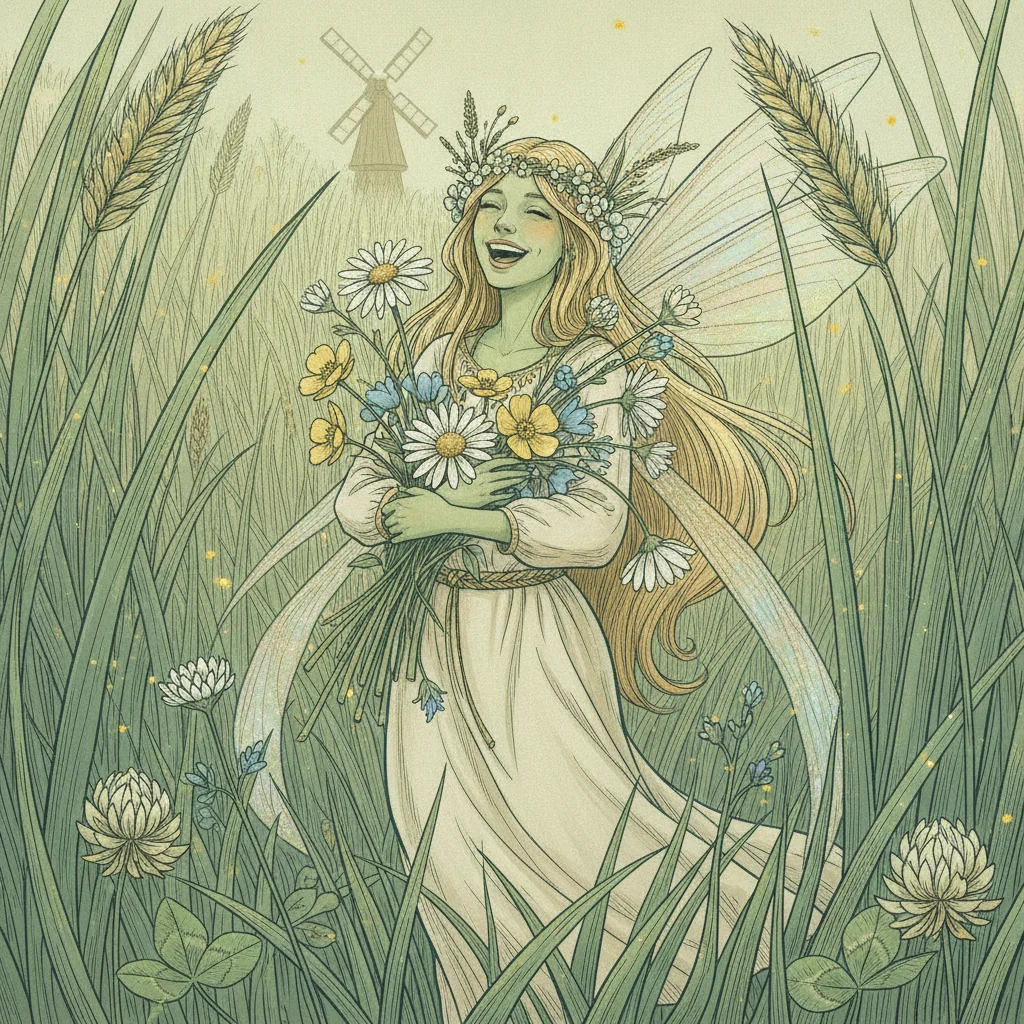
The vast rolling plains that make up most of the Heartland by land area are the Meadowlands, and the Sylphs of the Meadowlands are the breadbasket of the Kingdom — the most numerous people in the world, and the ones every other race pictures when they say Sylph. When the main entry describes villages of woven grass, the harvest year, and the long homesick songs, it is describing them.
They are also, and the court says this as the highest of compliments, the most humanlike people outside the Ring: farmers, millers, drovers, and market-wives whose lives a human would recognize at a glance. The Pixies have complicated feelings about the compliment and no time to dwell on them, because the flush is early this year.
The Windmills
Navigation in the plains is done by windmill. The grass is a canopy and the roads run beneath it, so every village raises its mill above the sea of stems — part granary, part nectar-press, part signal-tower — and a traveler steers from mill to mill the way a sailor steers by lights. To ask where a Pixie is from is to ask their mill, and the reply comes with a wind-direction attached: Foursails, west of the Third Road.
The mills are the tribe's one great engineering tradition and they are worked with wind-magic as much as wood: a village's best aeromancers take turns in the cap, feeding the sails in dead calm, spilling them in storm. A mill's sails are also spoken to — set at angles that carry meaning down the roads, so that a market glut, a dew-drowning, or a Wardency inspection is known three villages away by nightfall. The Wardency knows about the sail-code. It has never broken it, because the code is not written down and changes at every harvest dance.
A windmill village is a few dozen households around the mill, the press, and the market yard, where the farmers of a day's radius come in to trade. It is the trading nexus, the dance floor, the court of small claims, and the place the village argument has been continuing for sixty years.
Ways
The year is the harvest year — the flush, the Gild, the drying, the caravans, the long quiet after — and everything under Life in the main entry applies here without amendment: the found-names, the week of walking a new arrival around, the enormous homesick songbook that never names the place.
The table. Pixie hospitality is not the ceremonial kind. It is a full plate put in front of anyone who is present at mealtime, including Wardency assessors, including strangers, and — increasingly, in some villages, and this is where the trouble starts — including the Basekin field crews the ledgers list as equipment. Equipment does not eat at table. A plate is a legal opinion.
The dew-watch. Every village posts one through the drowning season, and it is the tribe's honored profession: the watcher who reads which blades will drop their dewfall by morning and stakes the paths accordingly. Dew-watchers retire into a seat by the mill door and an unchallengeable authority on everything.
The Gild. Three days at the height of summer when the flush outruns the province and everything gets drunk. Weddings are announced at the Gild, feuds are ended at it, and the sail-code has one setting, used only then, that means nothing that happens this week counts.
Relations
The Pixies feed the Ring, staff it through the Service Families, and are governed by a Wardency that is correct, popular, and not theirs. They send wool-wagons up to the Aurae and children to the Flaunt, and get back weaving and fashion respectively, and privately reckon they got the better of the first trade and the worse of the second.
The tribe's live question is the one the whole race is edging toward: the crews they work beside. The Drovers' Concord is mostly Pixie where it is Faerie at all; the Ones Who Have Started Saying It started saying it in Milkbarrow; and the plate at the table is quietly becoming the way a village declares which side of the question it is on — a custom the Chancery cannot prosecute without ruling on what a dinner means.
Playing One
- You are the default person of the whole Kingdom. Unremarkable everywhere, welcome nearly everywhere, and underestimated everywhere, which is a skeleton key if you choose to use it.
- You know how everything actually works. Harvests, caravans, tolls, schedules — the Kingdom's real machinery is your home terrain, and the court's version of it is a story you can spot the lies in.
- Your network is dinner tables. In any farming country you can find a mill, name a wind, and be fed and told everything by sundown.
- A starting complication: your village has started setting plates, your cousin in the Service Families begs you to make it stop before the Ring hears, and the crew-boss who eats at your table has finally asked you for something bigger than dinner.